Beyond Business as Usual: Assessing Additionality in Grassland Conservation
Native grasslands are the most heavily converted and least protected ecosystem in North America, with few federal or international protections in place to slow the degradation of a once prolific biome [1]. In-tact grasslands store an immense amount of carbon belowground through deep and interconnected root systems that reliably and durably sequester soil organic carbon. After decades of cropland conversion and development pressures, The Climate Trust (TCT) has been pioneering the use carbon finance to protect this highly fragmented – yet vitally important – natural climate solution.
TCT’s grasslands program follows additionality requirements set by the Climate Action Reserve (CAR) for projects in the U.S. and Canada. These guidelines require a project to pass two benchmarks to confirm additionality – a financial threshold and a suitability threshold:
- The financial threshold determines whether carbon revenue is imperative to stopping landowners from converting their grasslands to cropland. To quantify this, we look at the difference in rental rates between cropland and pastureland, known as the cropland premium. If the rental price difference is more than 40%, the project qualifies, and if it is over 80%, the project avoids a discount for uncertainty of total conversion in the baseline scenario [2].
- The suitability threshold ensures that the land is demonstrably suitable for conversion to cropland. If it lacks the right physical and soil characteristics for farming, then there is no true threat of conversion. To assess this, we use NRCS soil data to evaluate the land’s suitability for farming based on specific soil characteristics.
At TCT, we go beyond the protocol’s requirements by conducting detailed internal reviews to ensure each project stands up to our own additionality standards. Currently, all of our grassland projects have a cropland premium exceeding 100%, indicating unambiguous economic pressure to convert. We also analyze five years of data from the National Agricultural Statistics Service (NASS) to better understand recent land use trends in grassland vs. cropland in the local area. If it seems unlikely that farming equipment would be able to access a portion of the property, it is excluded from receiving carbon credit (even if they have qualifying soil types).
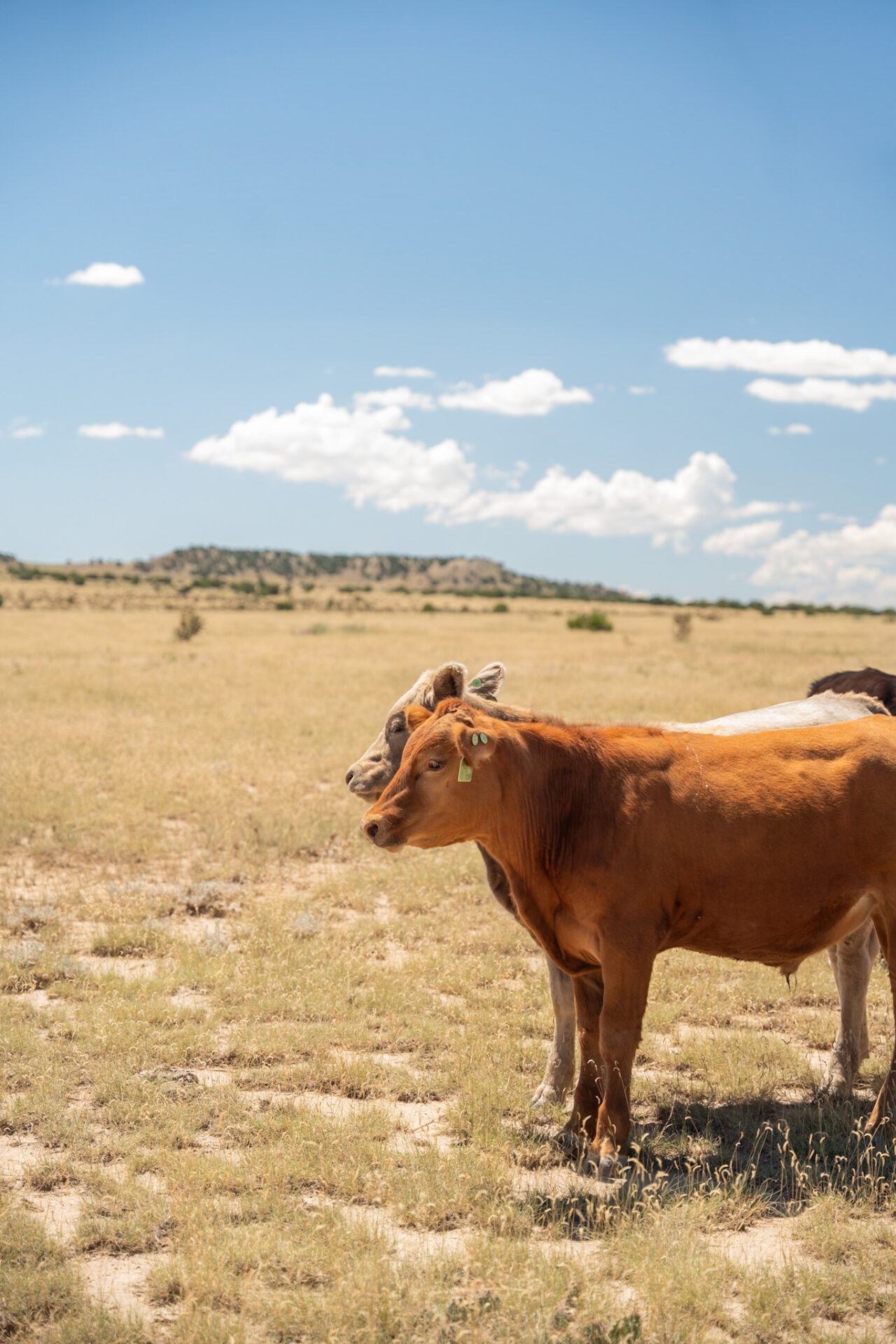
A prime example of this is our Delhi Ranch project in Colorado. The conservation easement placed in 2023 spans over 27,000 acres and is part of an ecosystem that used to thrive in much of the state. The shortgrass prairie of eastern Colorado has suffered significantly, with nearly half already lost to agriculture or other uses [3]. Delhi Ranch is located in a region where the cropland premium exceeds 300%, signaling a clear urgency to protect these grasslands. The most common crops grown in the surrounding counties are corn for grain, dry edible beans, and sorghum where continued expansion of cropland has caused a corresponding decrease in biodiversity, specifically among grassland bird species. Delhi Ranch provides critical habitat for a variety of wildlife including the cassin’s sparrow, grasshopper sparrow, lark bunting, long-billed curlew, and northern harrier, ensuring this shortgrass prairie stronghold will never be developed or converted. Revenue from the carbon project is also helping to support the long-term sustainability of a family-owned ranching operation – at a time when 17% of family ranches have been lost since 2017 [4]. The combined forces of economic pressure, succession planning gaps, and rising operational costs have caused many family-owned operations and agricultural communities to face hard decisions. Thankfully, the voluntary carbon market can help support current and future generations of ranchers across the Great Plains as they look to continue their ranching legacy and protect some of the world’s last remaining grasslands.
If you’re interested in supporting the Delhi Ranch project, please reach us via email at info@climatetrust.org.
[4]. USDA Press Release