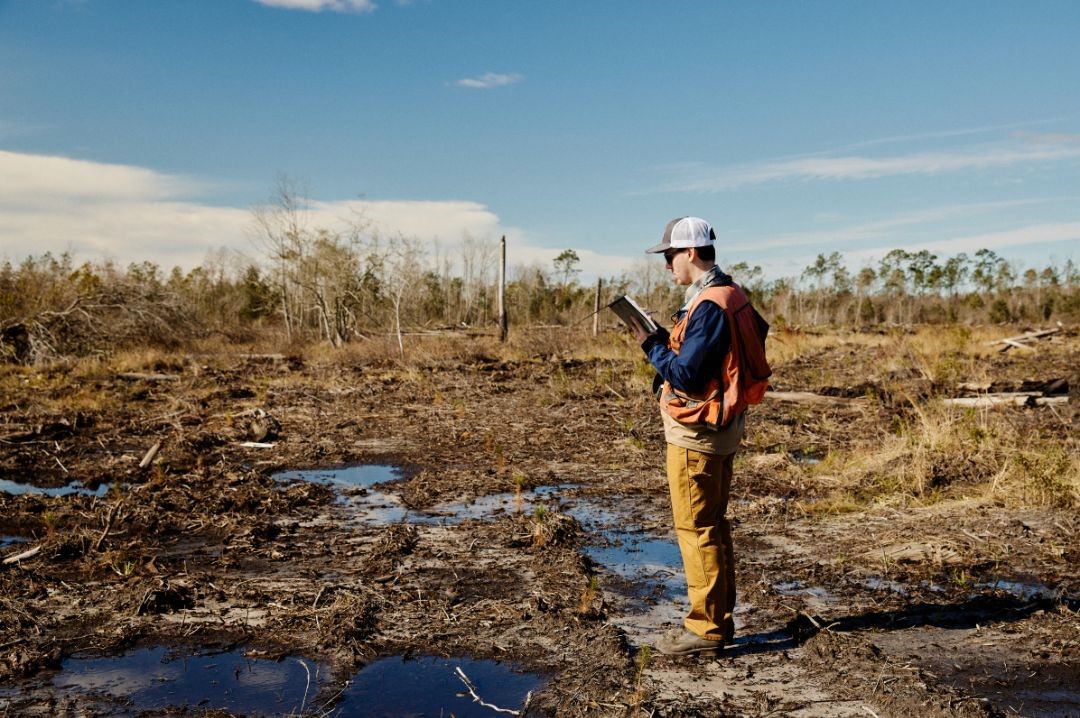
Climate Benefits of Salvage Harvesting
Salvage harvest is a vital forest management strategy aimed at addressing the rising frequency and severity of natural disturbances such as, wildfire, wind throw, and insect outbreaks. By removing trees killed or severely damaged by these events, it aids in recovering timber value and regeneration, reducing fuel load, and preventing further risks including disease spread or intensified future fires. Salvage harvest plays a significant role in harvest planning and is a common practice in many regions across the US. Although the salvage operation temporarily releases carbon dioxide through soil and biomass disturbances, they play an essential role in stabilizing long-term carbon dynamics by managing decomposing wood and facilitating the regeneration of healthy forest [1].
From a climate standpoint, salvage harvesting delivers measurable impact through the substitution effect and accelerated sequestration. Harvesting dead trees instead of live ones allows intact forest elsewhere to continue storing carbon, while salvaged material can be converted into durable wood products that extends beyond the forests. Studies such as Russell et al. (2018) in Superior National Forest highlights how integrated salvage planning can minimize biomass loss and sustain forest productivity after large-scale pest outbreaks [2]. In addition, by clearing affected stands and enabling timely reforestation, salvage operation helps convert disturbed areas back into an active carbon sink more quickly.
Despite its ecological advantages, salvage harvesting remains financially challenging due to high operational cost and market constraints associated with damaged timber. Carbon finance mechanism can play a key role by bridging this gap: rewarding landowners for long-term climate benefits derived from salvage and reforestation efforts. When combined with utilization of salvaged wood and proactive replanting, these initiatives contribute to emission reduction, carbon storage, and ecosystem resilience. This integrated approach ensures that post-disturbance landscapes are restored into productive, climate-positive forest systems capable of adapting to a changing environment. The Climate Trust recently deployed $3.8 million to landowners working on post-wildfire forest restoration projects, including salvage harvesting, through its Enabling Reforestation and Afforestation Success program. Click here to learn more.
References:
1. Ministry of Forests, British Columbia. (2023, September 28). Carbon impacts from salvage logging (Briefing Note for Information). Government of British Columbia.
2. Russell, M. B., Kilgore, M. A., & Blinn, C. R. (2017). Characterizing timber salvage operations on public forests in Minnesota and Wisconsin, USA. International Journal of Forest Engineering, 28(1), 66–72. https://doi.org/10.1080/14942119.2017.1291064