Post-Wildfire Reforestation - How do we assess additionality?
Forests are one of the most powerful tools for positive climate action, and reforestation and afforestation projects present an important opportunity to scale beneficial nature-based solutions impacts over time. In the U.S., the impact of wildfires is a stubborn concern, where reforestation needs continue to greatly outpace our collective capacity and funding for post-wildfire reforestation. In 2024 alone, 64,897 individual wildfire events impacted 8,924,884 forest acres in the U.S [1]. Federal and State spending on wildfire suppression continues to increase, with $3.71 billion spent in 2023 by the US Forest Service and the Department of Interior alone [2]. Increased spending for wildfire suppression has left forest owners, forest managers, and communities with fewer resources to access for post-wildfire rehabilitation and restoration.
Carbon finance can close the funding gap for landowners, land managers, and communities who are unable to support post-wildfire reforestation through traditional capital sources. Carbon finance should be driven towards projects that result in measurable and sustainable carbon removals and long-term positive climate impacts. For post-wildfire reforestation, this means a robust evaluation of the environmental additionality of projects.
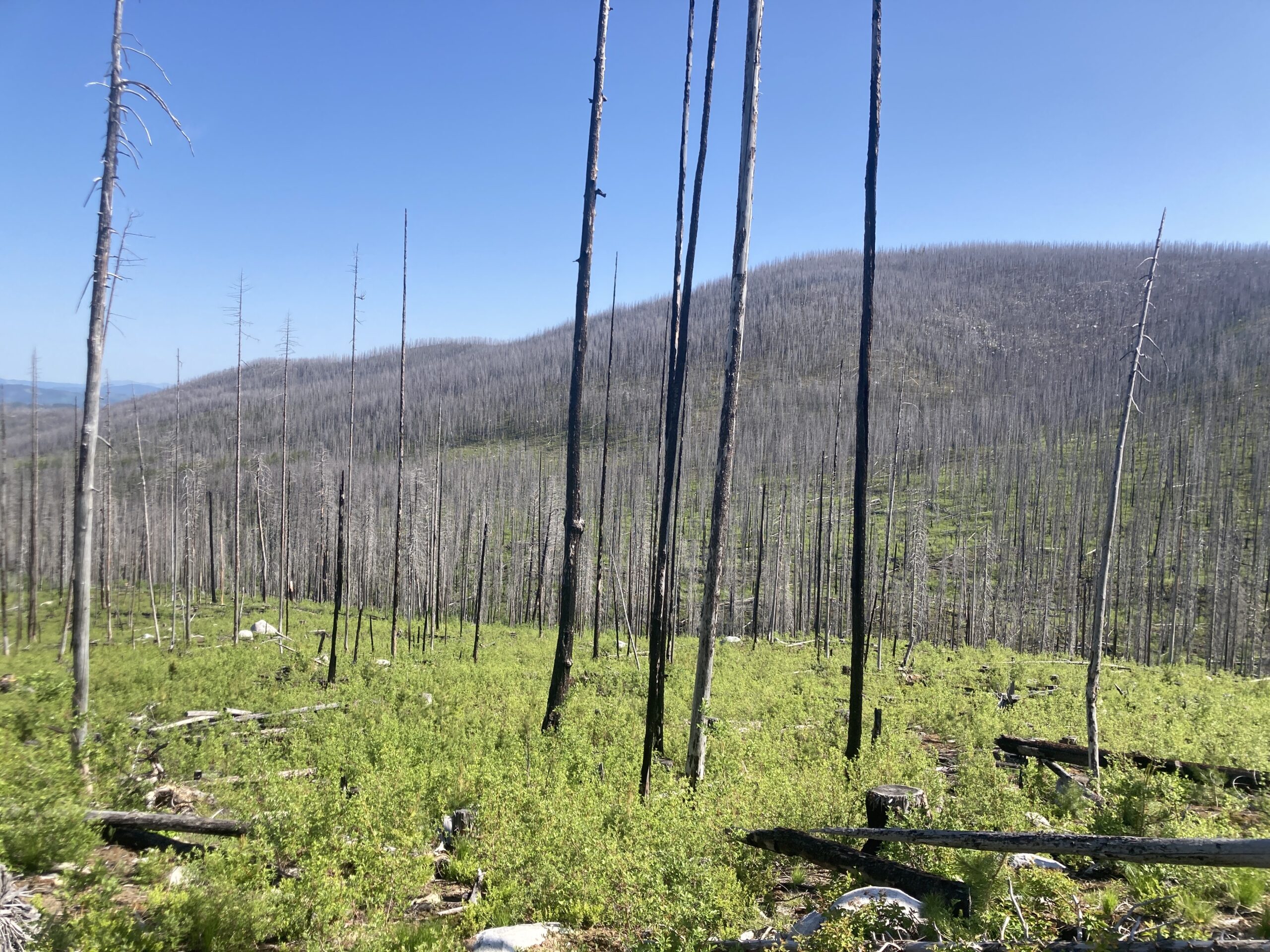
Not all forests need to be replanted after fire, especially lower-severity or more patchy fires. Fire is a natural part of many forest ecosystems, and an important management tool for land managers. However, when wildfire becomes catastrophic, the normal forest cycle of mature trees providing the seed for natural regeneration is interrupted when mature trees are burned and seed sources are missing or spaced too far apart for the forest to re-establish itself.
As part of our development of post-wildfire reforestation projects, The Climate Trust’s reforestation staff measure any natural regeneration present within the project area. The field assessment includes an evaluation of the distance from project areas to areas with mature live trees that can provide a viable seed source for future natural regeneration. We use the field data collected to develop forest growth and yield projections to quantify likely future biomass volumes during the carbon project term (40+ years) that would likely occur if the carbon project were not put in place and carbon finance was not provided to support planting and other management interventions. The growth and yield models used in this process established biomass growth curves are specific to the specific forest type and region within which the project is located. As the project continues, our project plans incorporate physical set-aside areas for ongoing measurement and monitoring. The data from these set-asides is used to re-assess background natural regeneration rates and prompt any dynamic baseline adjustments throughout the project term, to ensure baseline assumptions created when the project was initiated remain reflective of the actual conditions within the project area. This process is required by the American Carbon Registry methodology for afforestation and reforestation of degraded lands methodology, under which TCT is developing its first cohort of post-wildfire reforestation projects, which has been assessed by the ICVCM as meeting Core Carbon Principles (CCP) criteria.
References: